
Whether it’s a raccoon in the city or a moose in the country, we share the road with animals, making wildlife collisions a sad but real possibility on roads across Canada. Knowing what to do if you hit an animal with your car is crucial for your safety and for handling the situation correctly. From the immediate actions to take to navigating your car insurance claim, this guide will walk you through every step.
Tips for avoiding animal vehicle collisions 1. Be aware of your surroundings 2. Follow the speed limit 3. Check for warning signs 4. Be ready to react 5. Prepare for a collision What to do after hitting an animal with your car Safely pull off the road Check that all passengers are ok Contact emergency services Avoid contact with the animal Inspect your vehicle for damage Contact your insurance provider What happens if you hit a moose or a deer?
Ensure you are covered in all situations on the road with Sonnet
Tips for avoiding animal vehicle collisions
The best way to handle an animal collision is to avoid one in the first place. While not all accidents are preventable, defensive driving habits can significantly reduce your risk of one of these unfortunate animal vehicle collisions.
1. Be aware of your surroundings
Look for these specific roadside characteristics as clues for when animals are likely to be nearby and drive with extra caution:
- Creeks and drainages intersect the roads
- Habitat and forage is near the roadside
- Water sources are nearby
- Long, wide, straight stretches of road
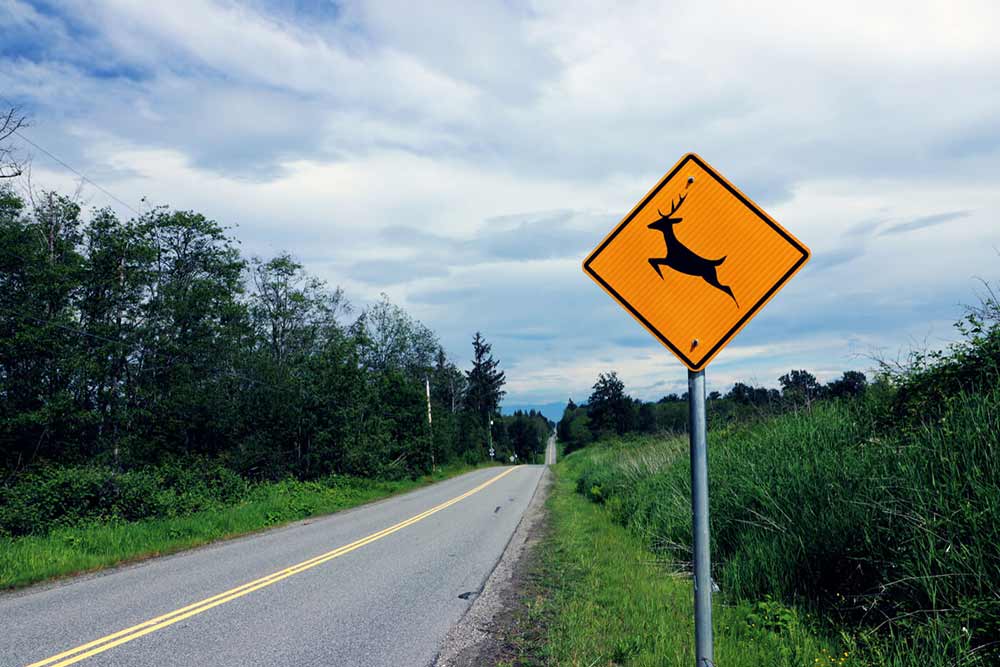
- Yellow wildlife warning signs
2. Follow the speed limit
Following the speed limit gives you more time to react if an animal suddenly appears on the road. The faster you’re going, the less time you have to brake safely. Reducing your speed, especially during dawn and dusk when many animals are most active, is a simple way to help prevent wildlife collisions.
3. Check for warning signs
Get into these simple habits when driving to spot animals as soon as possible:
- Scan the road from shoulder to shoulder
- Ask your passenger to be a second pair of eyes
- At night, use your high beams when possible to see further down the road
- Watch for the glowing eyes of animals in the dark
4. Be ready to react
If you do spot an animal on the road ahead of you, here’s how to handle the situation:
- Slow down and anticipate unpredictable behaviour
- Try to determine what the animal is doing and where it’s going
- Brake safely, keeping in mind traffic behind you and current road conditions
- Honk your horn with a few short bursts to try to scare off the animal
5. Prepare for a collision
Despite your best efforts, sometimes a collision is unavoidable. What should you not do if you hit an animal with your car? The most important thing is not to swerve. Swerving can lead to a more dangerous accident, such as a head-on collision with another vehicle or losing control and rolling into a ditch.
What to do after hitting an animal with your car
Knowing what happens if you hit an animal with your car can help you stay calm and focused. If you find yourself in this situation, follow these steps.
Safely pull off the road
Your first priority is safety. Pull over to a safe location, as far from moving traffic as possible. Turn on your hazard lights immediately to alert other drivers.
Check that all passengers are ok
Before doing anything else, check on yourself and your passengers. If anyone is injured, call 911 for emergency medical assistance right away.
Contact emergency services
Even if no people are hurt, you should often contact the authorities. Call the police if the animal is large enough to be a traffic hazard (like a deer or moose), or if your vehicle has sustained significant damage. You should also contact local or provincial animal control or conservation services to report an injured animal.
Avoid contact with the animal
Never approach an animal you’ve hit, even if it appears to be dead. An injured animal can be scared, in pain and unpredictable, posing a serious risk to your safety. Let the professionals handle it. If you get into a
Inspect your vehicle for damage
Once it's safe, assess your vehicle for damage. Look for broken lights, leaking fluids, tire damage or a damaged hood. If you're unsure whether your car is safe to drive, it's best to call for a tow truck. Be sure to take photos of the scene and the damage to your vehicle for your insurance company. This documentation is vital for your
Contact your insurance provider
Notify your insurance provider as soon as possible. An animal collision is a type of accident, and your insurer can guide you on the next steps for your claim.
You may have heard that insurers provide specific animal collision insurance that’s separate from your other coverage. This is usually not true. Instead, collisions with animals are usually included in your comprehensive coverage. When you contact your provider, this is exactly what you can ask them about.
Will insurance cover animal collisions?
This is a common question after an incident. Here’s what you need to know about your animal collision insurance coverage.
Does hitting an animal count as an accident? Yes, it does. However, it's typically treated differently from a collision with another vehicle. Depending on the nature and details of the accident, it could be considered at fault or not at fault. Either way, the key to being covered is having the right type of car insurance.
Many drivers ask, "Do you have to pay a deductible if you hit an animal?" Yes, if you make a claim, you may have to pay the deductible amount you selected for that coverage. You may have to pay a deductible even if you are not at fault because it is your share of the repair cost agreed upon in your policy.
What happens if you hit a moose or a deer?
What happens if you hit an animal with your car, especially a large one? Collisions with large animals like deer and moose can be particularly dangerous and cause extensive vehicle damage. In fact, deer are the most common animals involved in serious animal vehicle collisions across Canada.
The advice remains the same: do not swerve. Swerving to avoid a deer could cause a far more catastrophic accident. If you hit a large animal, it's almost certain your vehicle will not be drivable and will require towing. The process of reporting the incident and filing a claim is the same, but the need to prioritize your safety and call for help is even greater. Even a seemingly minor hit could hide serious underlying frame damage.
Ensure you are covered in all situations on the road with Sonnet
Unexpected events like wildlife collisions are a stressful part of driving. Having the right coverage provides peace of mind that you're protected. Sonnet offers comprehensive car insurance options to ensure you're covered for animal collisions and more. Get a quote today and drive confidently knowing you’re prepared for whatever the road throws your way.