



Accident benefits cover things like medical care, rehabilitation and income if you can’t work because of an injury from a car accident. Starting July 1, 2026, Ontario’s changing your benefits to give you more control over your coverage.


How are Ontario accident benefits changing?
More flexibility
Most auto insurance accident benefits in Ontario will become optional. Medical, rehabilitation and attendant care benefits are still mandatory, with the option to upgrade.
Tailored protection
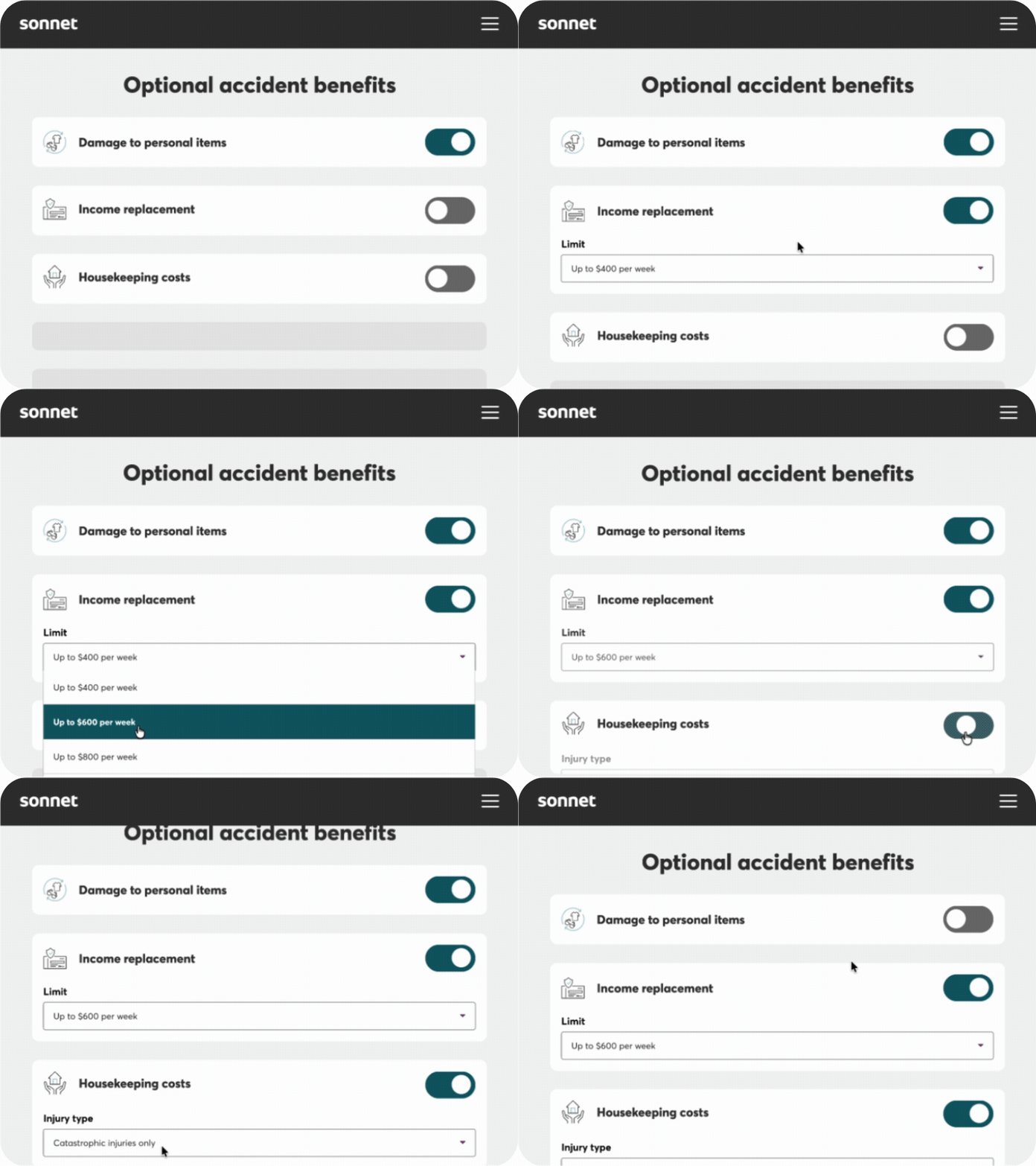
You're unique. Your insurance should be, too. Now you can customize your accident benefits and limits to build a policy – and a price – just for you.
Simplified claims
Making medical and rehabilitation claims just got easier. Now we pay these claims first, so you can save your workplace or private health insurance for when you need it most.

What does this mean for you?


What should you do next?
Here’s how to ensure you and your family are fully protected.


What accident benefits are now optional in Ontario?
Covers lost income if you can’t work due to an accident injury. Also called “indexation replacement”.
Helps if you’re injured, can’t carry on a normal life and don’t qualify for certain weekly benefits. Also called “non-earner benefit”.
Covers costs you incur to get help with household duties due to an accident injury. Also called “housekeeping and home maintenance”.
Repairs or replaces clothing, glasses and medical devices damaged in an accident.
Provides money to certain family members if you pass away because of a car accident.
Helps cover funeral costs if you or another covered person pass away.
Reimburses fees you may have lost if you’re unable to continue school after an accident. Also called “lost educational expenses”.
Covers reasonable costs incurred by eligible loved ones to visit you during treatment or recovery. Also called “expenses of visitors”.
Covers extra costs you incur if you’re unable to care for your dependants after an accident injury.
Covers costs if you can’t continue full-time caregiver duties due to an accident injury.
Increases certain limits and weekly payments to adjust for the cost of living each year. Also called “indexation benefit”.
FAQs
Starting July 1, 2026, Ontario’s making most accident benefits optional to give you more control over your coverage.
Standard medical, rehabilitation and attendant care benefits are still mandatory, with the option to upgrade.
Here’s how this change impacts your upcoming renewal.
1. Your policy will renew with the new accident benefits plan
On your renewal date, your accident benefits will automatically switch over to the new plan. Don’t worry, you’ll keep the same coverage and limits you had before – but now, you can customize them to suit your needs.
2. It affects who’s covered and how you make certain claims
On top of making most accident benefits optional, Ontario’s introduced two more big changes that’ll impact you and others. These changes start on July 1, 2026 – regardless of your renewal date.
How you make medical and rehabilitation claims
If you have both auto insurance and a workplace or private benefits and you’re injured in a car accident, your auto insurance will now pay first for medical and rehabilitation costs (except for medication).
This change lets you save your workplace or private health insurance for when you need it most. It also means faster approvals, fewer delays, and easier access to treatment so you can focus on recovery – not red tape.
Who’s covered by your accident benefits
Standard accident benefits
Standard accident benefits aren’t changing when it comes to who’s covered. They’ll still cover all passengers (including uninsured passengers), and pedestrians and cyclists (including uninsured pedestrians and cyclists).
Optional accident benefits
The optional accidents you buy will still cover:
- you (the named insured)
- the named insured’s spouse
- dependants of the named insured and of the named insured’s spouse (like children or ageing parents who live with you)
- anyone listed on the policy as drivers of the insured vehicle
The optional accidents you buy will no longer cover:
- pedestrians you may harm in an accident
- cyclists you may harm in an accident
- uninsured passengers that may be harmed in an accident in your vehicle
What should you do now?
- Review your mandatory and optional accident benefits and limits.
- Customize them to suit your situation. Coordinate with work or private benefits if you need to.
- Update your policy if you've changed your accident benefits.
- Download and review your policy documents after to ensure you’ve got the right coverage for you.
This is a big change – that’s why we’re here to help. Contact us if you have any questions.
On top of making most accident benefits optional, Ontario’s introduced two more big changes that’ll impact you and others. These changes start on July 1, 2026.
What’s changing?
1. How you make medical and rehabilitation claims
Before, you’d use workplace or private benefits first to pay medical and rehabilitation costs if you were injured in a car accident. Your car insurance only kicked in after exhausting those benefits.
Now we’ll pay these claims first (except for medication costs) so you can save your workplace or private health insurance for when you need it most. This means faster approvals, fewer delays, and easier access to treatment so you can focus on recovery – not red tape.
2. Who’s covered by your accident benefits
Standard accident benefits
There are no changes to who’s covered under your standard accident benefits. They’ll still cover all passengers (including uninsured passengers), and pedestrians and cyclists (including uninsured pedestrians and cyclists).
Optional accident benefits
The optional accident benefits you buy will still cover:
- you (the named insured)
- the named insured’s spouse
- dependants of the named insured and of the named insured’s spouse (like children or ageing parents who live with you)
- anyone listed on the policy as drivers of the insured vehicle
The optional accident benefits you buy will no longer cover:
- pedestrians you may harm in an accident
- cyclists you may harm in an accident
- uninsured passengers that may be harmed in an accident in your vehicle
This is a big change – that’s why we’re here to help. Contact us if you have any questions.
It’s a new document included your auto insurance policy. It outlines the following:
- The optional accident benefits you’ve bought and declined
- Who is and isn’t covered by the optional accident benefits you bought
- How medical and rehabilitation claims payouts are made
Where to find your documents
You can download it from your Sonnet account, 24/7. Here’s how:
- Log into your account.
- Select your auto policy.
- Select Download Documents.
- Download your policy summary. You’ll find the endorsement attached towards the end.
This is a big change – that’s why we’re here to help. Contact us if you have any questions.
Starting July 1, 2026, Ontario’s making most accident benefits optional to give you more control over your coverage.
Standard medical, rehabilitation and attendant care benefits are still mandatory, with the option to upgrade.
Newly optional benefits include: income replacement, non-earner support (also called “non-earner benefit”), housekeeping costs (also called ‘housekeeping and home maintenance’), damage to personal items, lost education costs (also called “lost educational expenses”), death benefit, funeral expenses, visitor expenses (also called “expenses of visitors”), dependant care, caregiver benefit, and inflation protection (also called “indexation benefit”).
Note: Before July 1, 2026, these coverages were automatically included.
Changes to who’s covered and how you make certain claims
Ontario’s also introduced two more big changes that’ll impact you and others. These changes start on July 1, 2026, regardless of your policy start date.
1. How you make medical and rehabilitation claims
Before, you’d use workplace or private benefits first to pay medical and rehabilitation costs if you were injured in a car accident. Your car insurance only kicked in after exhausting those benefits.
Now we’ll pay these claims first, so you can save your workplace or private benefits for when you need it most. This means faster approvals, fewer delays, and easier access to treatment so you can focus on recovery – not red tape.
2. Who’s covered by your accident benefits
Standard accident benefits
There are no changes to who’s covered under your standard accident benefits. They’ll still cover all passengers (including uninsured passengers), and pedestrians and cyclists (including uninsured pedestrians and cyclists).
Optional accident benefits
The optional accidents you buy will still cover:
- you (the named insured)
- the named insured’s spouse
- dependants of the named insured and of the named insured’s spouse (like children or ageing parents who live with you)
- anyone listed on the policy as drivers of the insured vehicle
The optional accidents you buy will no longer cover:
- pedestrians you may harm in an accident
- cyclists you may harm in an accident
- uninsured passengers that may be harmed in an accident in your vehicle
What should you do now?
- Review your mandatory and optional accident benefits and limits.
- Customize them to suit your situation. Coordinate with work or private benefits if you need to.
- Update your policy if you’ve changed your optional benefits.
- Download and review your policy documents after to ensure you’ve got the right coverage for you.
This is a big change – that’s why we’re here to help. Contact us if you have any questions.